
7. Pressures - Solid Waste
Le rapport sur l’état de l’environnement 2022 est un document technique destiné à un usage interne. Il n’est disponible qu’en anglais.
Introduction
Solid waste creates significant pressure on the environment:
- Solid waste facilities are required for most materials we throw away
- New raw materials are needed to replace these materials
- Anaerobic decomposition of organic material in solid waste facilities generates greenhouse gas emissions and leachate
- Many community solid waste facilities in the NWT have accumulated stockpiles of hazardous wastes
- Improper solid waste disposal can attract wildlife and often leads to increased wildlife mortality

Waste Reduction and Diversion can reduce some of these negative impacts associated with solid waste on the environment.
There is currently little information on the amount of solid waste produced in the NWT. Available data on waste generation, diversion and disposal in the NWT is limited and sometimes inconsistent, making it difficult to identify a reliable indicator for this focal point. Many solid waste facilities in the NWT are not staffed. Gates have been installed at many facilities, but not all communities restrict access. This makes it difficult to control and monitor the waste entering many landfills.
The NWT currently has three regulated programs aiming to reduce or divert materials from the waste stream: The Beverage Container Program, the Electronics Recycling Program, and the Single-use Retail Bags Program. Indicators for each of these programs are included in this report.
In June 2019, the GNWT published the Waste Resource Management Strategy and Implementation Plan (the Strategy) as a ten year road map to improve the management of solid waste in the NWT. The Strategy aims to foster a shift away from a culture of waste. Valuable resources are being extracted, manufactured, transported, consumed and ultimately wasted. This Strategy aims to disrupt the current model of making, using and disposing of resources to protect the water, land, wildlife and air.
In the Strategy, the GNWT committed to implement or expand three to five territory-wide waste reduction or diversion programs by 2030-31. To that end, ECC worked with MACA, the Waste Resource Advisory Panel (WRAP) and the Waste Reduction and Recovery Advisory Committee (WRRAC), to prioritize materials for the next three programs to be implemented. After considering the human and environmental impacts of landfilling, and the feasibility of implementing NWT-wide programs for various possible materials, the first three materials for new programs were selected.
In August 2021, the GNWT announced the next three diversion programs to be implemented will address:
- used oil;
- tires; and
- an expanded suite of electronic and electrical products.
As a start to fulfilling these commitments, the GNWT launched the Expanded Electronic and Electrical Product Recycling pilot project (E-Pilot) in October 2021. Participating recycling depots in six NWT communities can now recycle an expanded suite of 500+ electronics and electrical products. More information on the E-Pilot is available in indicator 7.3 – Trends in Electronics Recycling.
Extended Producer Responsibility
Extended producer responsibility (EPR) is a waste management policy approach where a producer’s physical and/or financial responsibility for a product is extended to the post-consumer stage of a product’s life cycle. EPR shifts the cost of managing the end-of-life phase of a product away from consumers to producers.
As part of the Strategy, ECC committed to updating the Waste Reduction and Recovery Act to enable an EPR framework. As new waste reduction and diversion programs are created, ECC will assess whether EPR is an appropriate tool to use in the NWT. This supports the GNWT’s commitment to work toward the development of EPR framework legislation and/or regulations under the Canadian Council of Ministers of the Environment (CCME) approved a Canada-wide Action Plan for Extended Producer Responsibility (CAP for EPR).
7.1 Trends in single-use retail bag distribution
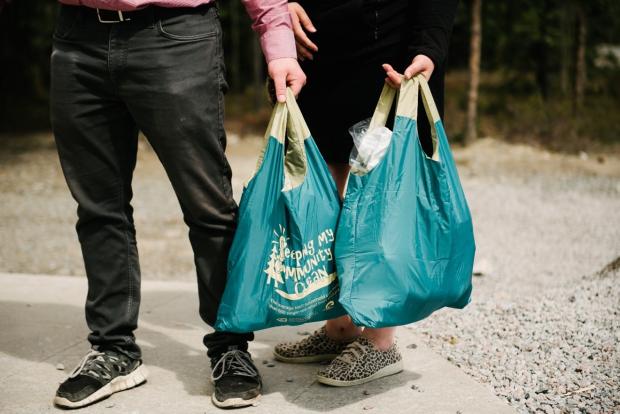
This indicator tracks the estimated number of single-use retail bags of all materials avoided in Northwest Territories (NWT) retail stores through the Single-use Retail Bag Program.
Significant amounts of energy, water, and other natural resources are used for the manufacture of single-use retail bags. These items are generally only used once and can take hundreds of years to fully decompose in landfills. To reduce the number of single-use retail bags used in NWT communities, the GNWT developed the Single-use Retail Bag Program.
This indicator was prepared by the Government of the Northwest Territories, Department of Environment and Climate Change, using information obtained the Environmental Protection and Waste Management Division.
NWT Focus
The Single-use Retail Bag Program (SRBP) was implemented on January 15, 2010, as legislated by the Single-use Retail Bag Regulations under the Waste Reduction and Recovery Act. The GNWT was the first provincial or territorial jurisdiction in Canada to regulate the distribution of single-use retail bags.
Under the program, consumers pay 25 cents for each single-use retail bag they require from retailers. The collected fees go into the Environment Fund, which is used to support current and future waste reduction and recovery programs and initiatives. All retailers who provide single-use retail bags to customers in the NWT are required to register and participate in the program.
Current View: status and trend
Since the start of the SRBP in 2010, more than 69 million single-use retail bags are estimated to have been prevented from being used and discarded in the territory. This amounts to a 72% reduction in use based on pre-program estimates.
As a preventive measure to avoid the possible spread of COVID-19, and to support retailers and distributors working to provide essential services within our communities, the 25 cent fee on single-use retail bags was temporarily waived from March 28 to June 30, 2020. This meant more bags were distributed, and fewer bags were avoided in 2020-21.
A total of 3,430,056 single-use retail bags were distributed to retail stores in the NWT during the 2020-2021 fiscal year. ECC estimates this translates to approximately six million fewer bags used in 2020-2021 compared to pre-program estimates. This represents approximately 132 fewer bags per NWT resident for that year. For comparison to pre-pandemic results, ECC estimates that the 10-year average annual reduction in single-use retail bags from 2011-12 to 2020-21 is 6.7 million bags, or 150 bags avoided per NWT resident.
Figure 1 shows the trend in use of single-use retail bags from 2011-2021.

Figure 1: Number of single-use retail bags used and avoided in the NWT per fiscal year, 2011-2021*
*The estimated number of bags avoided through the SRBP is based on population size multiplied by the average number of single-use retail bags avoided per person.
Looking around
In December 2021, the Federal Ministers of Environment and Climate Change and of Health announced draft regulations under the Canadian Environmental Protection Act banning certain single-use plastics deemed to be harmful. The proposed regulations would ban the manufacture, import and sale of single-use retail bags as well as cutlery, foodservice ware, ring carriers, stir sticks, and straws. This is being done as part of the Government of Canada’s efforts to transition the country to a circular economy with zero plastic waste by 2030. The consultation period on the draft regulations ran until March 5, 2022. Proposed in the draft regulations is a one-year transition period between the final publication and coming into force, however a shorter transition period of 6 months is being considered. The Federal Government’s intent is to finalize these Regulations and bring the bans into force as quickly as possible after reviewing and considering the comments received during the consultation. Bans may be implemented as early as late 2022 (Ref 1).
In November 2018, the Canadian Council of Ministers of the Environment (CCME), of which the GNWT is a member, approved in principle the Canada-wide Strategy on Zero Plastic Waste. This strategy aims achieve the vision of a circular economy for plastics and outlines the changes needed to improve plastic design, collection, clean-up, and value recovery to keep plastics in the economy and out of the environment. (Ref. 2).
Looking forward
The GNWT continues to encourage businesses and consumers to go single use bag-free and strives to maintain a high rate of participation in the SRBP to reduce single-use retail bag use. The imminent federal ban on single-use plastics, including plastic check-out bags, should also have a positive effect on reducing waste in the NWT.
Find out more
For more information on the NWT’s Single-use Retail Bag Program, please visit the SRBP website by clicking here: https://www.ecc.gov.nt.ca/en/services/waste-reduction-and-recycling/single-use-retail-bag-program
Financial statements and annual reports from the Waste Reduction and Recovery Program can be found through the ECC resources webpage by clicking here: https://www.ecc.gov.nt.ca/en/resources
References
Ref. 1. Government of Canada. December 21, 2021. Government of Canada moving forward with banning harmful single-use plastics. https://www.canada.ca/en/environment-climate-change/news/2021/12/government-of-canada-moving-forward-with-banning-harmful-single-use-plastics0.html
Ref. 2. Canadian Council of Ministers of the Environment. November 23, 2018. Strategy on Zero Plastic Waste. https://www.ccme.ca/en/res/strategyonzeroplasticwaste.pdf.
Ref. 3. Waste Reduction and Recovery Program 2020-2021 Annual Report. 2022. GNWT. Yellowknife, NT.
7.2 Trends in percent of beverage containers that are returned for reuse and recycling
This indicator tracks the quantity of beverage containers diverted from landfills in the NWT through reuse and recycling under the Beverage Container Program (BCP).
Beverage containers are made of natural resources that should not be wasted. Plastic, aluminum, glass, and multi-material containers (e.g. juice boxes and milk cartons) can be recovered to make new products. Reusing and recycling beverage containers prevents these items from entering NWT landfills, allows for fewer raw materials to be used to make new consumer goods. Reusing containers and recycling aluminum reduces the amount of energy used to make new beverage containers.
This indicator was prepared by the Government of the Northwest Territories, Department of Environment and Climate Change, using information obtained the Environmental Protection and Waste Management Division.

NWT Focus
The BCP was implemented in November 2005 and was the first program created under the Waste Reduction and Recovery Act. The BCP operates through a network of permanent recycling depots and temporary satellite depots. Under the BCP, all ready-to-serve beverage containers are recycled, including soft drink, water, juice, milk, and alcohol containers.
Community recycling depots are operated by individuals, businesses, schools, non-profit groups, and Indigenous and community governments throughout the NWT. During the 2020-2021 fiscal year, the BCP provided employment to 36 part-time and 10 full-time employees at 20 recycling depots and three regional processing centres in the territory.
Consumers in the NWT pay a refundable deposit and non-refundable handling fee when purchasing ready-to-serve beverages. When consumers return an empty container to a local recycling depot or satellite depot, the refundable deposit they were charged at the time of purchase is refunded to them. The non-refundable handling fees, unredeemed refundable deposits from containers not returned to depots, and income from salvaged materials fund the operation of the BCP. The largest operating expense of the BCP is paying out refundable deposits. Other expenses include recycling depot and regional processing centre handling fees, purchasing and maintaining equipment, transportation, contract services to run satellite depots, operator grants, storage, and wages for staff to administer the program.
Beverage containers collected at recycling depots are sent to regional processing centres in Yellowknife, Hay River, and Inuvik. At regional processing centres, containers are consolidated, baled, and shipped to recycling facilities in Alberta and the United States to be processed and made into new materials. Figure 1 shows what becomes of containers after they are returned to NWT depots.

Current View: status and trend
While the 10-year average recovery rate is 84% (including 2020-2021), the 2020-2021 fiscal year saw a record low of 62%. This low rate is a result of two compounding trends: firstly, there were significantly more containers distributed in the NWT to be recycled, and secondly, depot closures and reduced service levels due to the COVID-19 pandemic made it more challenging to collect these containers.
Since the inception of the program in 2005, more than 378 million containers have been returned. This amounts to more than $41 million refunded to the residents of the NWT throughout the course of the program. Figure 2 shows the historical recovery rates from 2011-2021.

In 2020-21, more than 32.5 million containers were distributed through retailers in the NWT and over 20 million were returned through the BCP program. Table 1 displays the recovery rate for each material.
Table 1: Beverage Container Recovery Rate for 2020-2021 Fiscal Year

* Containers reported returned for large aluminum and large drink pouches are likely a result of improper coding of containers received at depots. ECC is working with operators to prevent improper coding. As these numbers are relatively small compared with the large volume of containers processed by the BCP, this error does not have significant implications.
Looking around
Several provinces and territories in Canada offer beverage container recycling programs within their jurisdictions.
Most Canadian deposit-refund programs like the GNWT's experienced a dip in recovery rates as a result of COVID-19 in 2020-21. The dip was especially pronounced in the NWT because the GNWT's cautious approach to preventing the spread of COVID-19 meant our depots were closed longer than depots elsewhere.
More information on beverage container recycling programs across Canada can be found in the following report:
Who Pays What?: An Analysis of Beverage Container Recovery and Costs in Canada, November 2020. https://www.cmconsultinginc.com/wp-content/uploads/2021/02/WPW-2020-FINAL-JAN-30.pdf
Looking forward
The COVID-19 pandemic has had an impact on the BCP during the 2019-2020 and 2020-2021 fiscal years. To prevent the spread of COVID-19, depots experienced closures and reduced service levels during these years. As a result, the program experienced a substantial decrease in the number of containers returned and saw lower recovery rates than previous years. In the long term, the GNWT anticipates recovery rates for the program to stabilize and return to normal levels.
The GNWT strives to increase the BCP recovery rate and will continue to make improvements to program operations and services.
Find out more
For more information on the NWT’s Beverage Container Program, please visit the BCP website by clicking here: https://www.ecc.gov.nt.ca/en/services/waste-reduction-and-recycling/beverage-container-program
Financial statements and annual reports from the Waste Reduction and Recovery Program can be found through the ECC resources webpage by clicking here: https://www.ecc.gov.nt.ca/en/resources
References
Ref. 1. Waste Reduction and Recovery Program 2020-2021 Annual Report. 2022. GNWT. Yellowknife, NT.
7.3 Trends in electronics recycling
This indicator tracks the quantity of electronics diverted from solid waste facilities in the Northwest Territories (NWT) though recycling under the Electronics Recycling Program (ERP).
When electronics are disposed of in landfills, burned, or exposed to the elements; harmful materials they contain such as lead, mercury, brominated flame retardants, and halogenated hydrocarbons can leach into the natural environment. Recycling electronics helps keep these harmful materials contained and allows recovery of valuable resources such as gold, aluminum, and precious metals to be used to make new products.
This indicator was prepared by the Government of the Northwest Territories, Department of Environment and Climate Change, using information obtained the Environmental Protection and Waste Management Division.

NWT Focus
The ERP was implemented on February 1, 2016 as legislated by the Electronics Recycling Regulations under the Waste Reduction and Recovery Act. It operates through the network of recycling depots and regional processing centres established by the Beverage Container Program. As of March 31, 2021, there were 10 recycling depots that accept electronics for recycling year-round. Electronics are also collected in other communities during electronics recycling collection events, typically once per year in eligible communities. An additional five beverage container depots also began accepting electronics for recycling year-round as of November 2021.
Electronics are shipped to regional processing centres located in Inuvik, Hay River and Yellowknife to be consolidated and sent to a registered recycling facility in Alberta.
Electronics identified in the Electronic Recycling Regulations and distributed within the NWT are subject to an environmental handling fee charged at the time of purchase. Fees collected go to the Environment Fund to cover the cost of running the ERP.
Current View: status and trend
During the 2020-2021 fiscal year, approximately 74.2 tonnes of electronics were collected for recycling. This works out to an average of 1.6 kilograms per person. Table 1 shows the total tonnage by processing centre region, the population of each region and the average kilograms per person.
Table 1: Electronics Collected for Recycling in 2020-2021

Since the launch of the ERP, a total of 424 tonnes of electronics have been collected for recycling. Figure 1 shows the trend in the collection of electronics from 2016-2021.

Figure 1: Electronics Collected for Recycling from 2016-2021 from each processing centre region.
Looking around
All other Canadian provincial and territorial jurisdictions, except for Nunavut, have electronic recycling programs in place.
The first year experienced the highest recycling rate for the Electronics Recycling Program. This may be because some people were storing and stockpiling their electronics and waiting for the program to begin rather than throwing them away in the landfill. This first year spike is common for programs in other jurisdictions.
The lower tonnes recovered in subsequent years is likely due to the fact that manufacturers are now making products that are smaller, lighter, and multifunctional.
In 2020-21, the NWT saw the lowest rate of recycling for the program. Most Canadian provincial and territorial jurisdictions electronic recycling programs also saw a decrease in tonnage received in 2020 citing COVID-19 restrictions, temporary site closures, and people electing to staying home,
More information on other jurisdiction’s electronic recycling programs can be found in Electronic Products Recycling Association’s 2020 Annual Report:
https://epra.ca/wp-content/uploads/annual_reports/english/2020/?page=1
Looking forward
In 2021, the GNWT committed to creating a territory-wide program to recycle an expanded suite of electronic and electrical products. In October 2021, ECC launched the Expanded Electronic and Electrical Product Recycling pilot project (E-Pilot) accessible to 85% of the NWT population. Collection events and community depots in Fort Providence, Fort Smith, Hay River, Inuvik, Norman Wells and Yellowknife now accept an additional 500+ electronics and electrical products including small appliances and lighting, audio visual devices, telecom devices, power and air tools, electronic games, toys and musical instruments, lawn and garden tools, and solar panels. The E-Pilot is expected to run for two years. During this time, the GNWT will collect data and compile research and analysis of recycling processes, the associated costs, and anticipated demand levels for a variety of electronic and electrical waste. This information will be important to help design a sustainable program to best manage this expanded suite of products.
Find out more
For more information on the NWT’s Electronics Recycling Program and the E-Pilot, please visit the ERP website at: https://www.ecc.gov.nt.ca/en/services/waste-reduction-and-recycling/electronics-recycling-program
Financial statements and annual reports from the Waste Reduction and Recovery Program can be found through the ECC resources webpage at: https://www.ecc.gov.nt.ca/en/resources
References
Ref. 1. Waste Reduction and Recovery Program 2020-2021 Annual Report. 2022. GNWT. Yellowknife, NT.
7.4 Status of Historic Hazardous Waste Removal
This indicator reports on the quantity of historic hazardous waste removed from solid waste facilities in the Northwest Territories (NWT) though the Clean Up Clean Start Program.
Historic hazardous waste stockpiled at solid waste facilities was identified as an environmental concern due to the potential for fuels, oils, grease, paints and other hazardous material to leach into the natural environment. Clean Up - removing hazardous waste stockpiles and Clean Start -improving waste management facilities and practices are priority actions under the 2019 NWT Waste Resource Management Strategy and Implementation Plan. Removing these stockpiles will prevent the discharge of contaminants to the environment and serve as a starting point for working with communities in a proactive manner to better manage hazardous wastes in the future.
Evolving from discussions between the Government of the Northwest Territories (GNWT) Department of Environment and Climate Change (ECC), the Department of Municipal and Community Affairs (MACA) and the NWT Association of Communities, the Clean Up Clean Start program became an action under Goal 3 of the Waste Resources Management Strategy and moving forward MACA is working in partnership with communities to achieve this.
The Investing in Canada's Infrastructure Program (ICIP) funding provided an excellent opportunity for community governments to seek funding to support implementation. ICIP funding has been approved for five Regional Solid Waste Diversion Projects. The GNWT Department of MACA will be providing the project management lead and GNWT staff will be providing technical and logistical support throughout the projects. Data for this indicator is obtained from ECC’s Environmental Protection and Waste Management Division.

This indicator was prepared by the Government of the Northwest Territories, Department of Environment and Climate Change, using information obtained the Environmental Protection and Waste Management Division.
NWT Focus
Past management practices at solid waste facilities across the NWT historically resulted in stockpiles of hazardous waste accumulating at these sites. Concerns regarding historical hazardous waste at these sites was first identified in the early 2000’s and work to estimate inventories in certain communities was completed in 2011. The technical nature of identifying and consolidating hazardous waste was also identified as a concern for community public works personnel. Through the identification of these historical stockpiles of hazardous waste and the request from assistance from communities, the Clean Up Clean Start Program was initiated. Under the Waste Resource Management Strategy and Implementation Plan the GNWT will be exploring the feasibility of a coordinated backhaul program. The removal of this historic hazardous waste with community public works staff involvement also serves as a proactive training session for the management of future hazardous waste to prevent large unmanageable stockpiles and promotes regulatory compliance with licencing requirements for the solid waste facility. Further to on-site training, signage is provided to aid in the proper segregation of different waste types.
Current View: status and trend
From 2017-2021, approximately 244,294 L of liquid hazardous waste and 64,169 kg of solid hazardous waste were consolidated and shipped for disposal or recycling to a registered hazardous waste receiving facilities in Alberta. This waste came from the communities of Paulatuk, Fort Providence, Tulita, Fort Good Hope, Fort Simpson and Norman Wells. Currently, communities and MACA have received federal funding to address infrastructure needs at solid waste sites that also address historic stockpiles in the 5 regions in the NWT. Communities have allocated approximately $1.9 million and successfully applied for an additional $5.7 million from the federal ICIP. Planning has been underway since 2020 and on the ground work is expected to begin in 2022.
Looking around
Across Canada, waste in general is a growing problem. The segregation of waste into inert material, recyclables and hazardous waste must be addressed. Remote communities and sites across Canada often have similar issues, including historic stockpiles of hazardous waste due to the high costs of transportation and disposal at hazardous waste receiving facilities.
Looking forward
In 2022, MACA will start work with 10 or more communities to remove hazardous and make improvements at their solid waste facilities. This initiative will result in a significant reduction in the historical hazardous waste stockpiles currently in the NWT.
Find out more
For more information, please see the NWT Guideline for Hazardous Waste Management available on ECC’s website at: https://www.ecc.gov.nt.ca/sites/enr/files/resources/128-hazardous_waste-interactive_web_0.pdf
Further guidelines on specific types of hazardous waste can be found through the ECC guidelines webpage at: https://www.ecc.gov.nt.ca/en/services/guidelines